UPSC Prelims Pattern 2026
UPSC Prelims Pattern 2026: Complete Guide with Real Examples
The UPSC Civil Services Preliminary Examination is often called the gateway to the IAS. It is the first major hurdle in the UPSC journey, and a single day of performance determines whether you move to Mains or wait another year. That is why understanding the exam pattern is not optional. It is the first step of serious preparation.
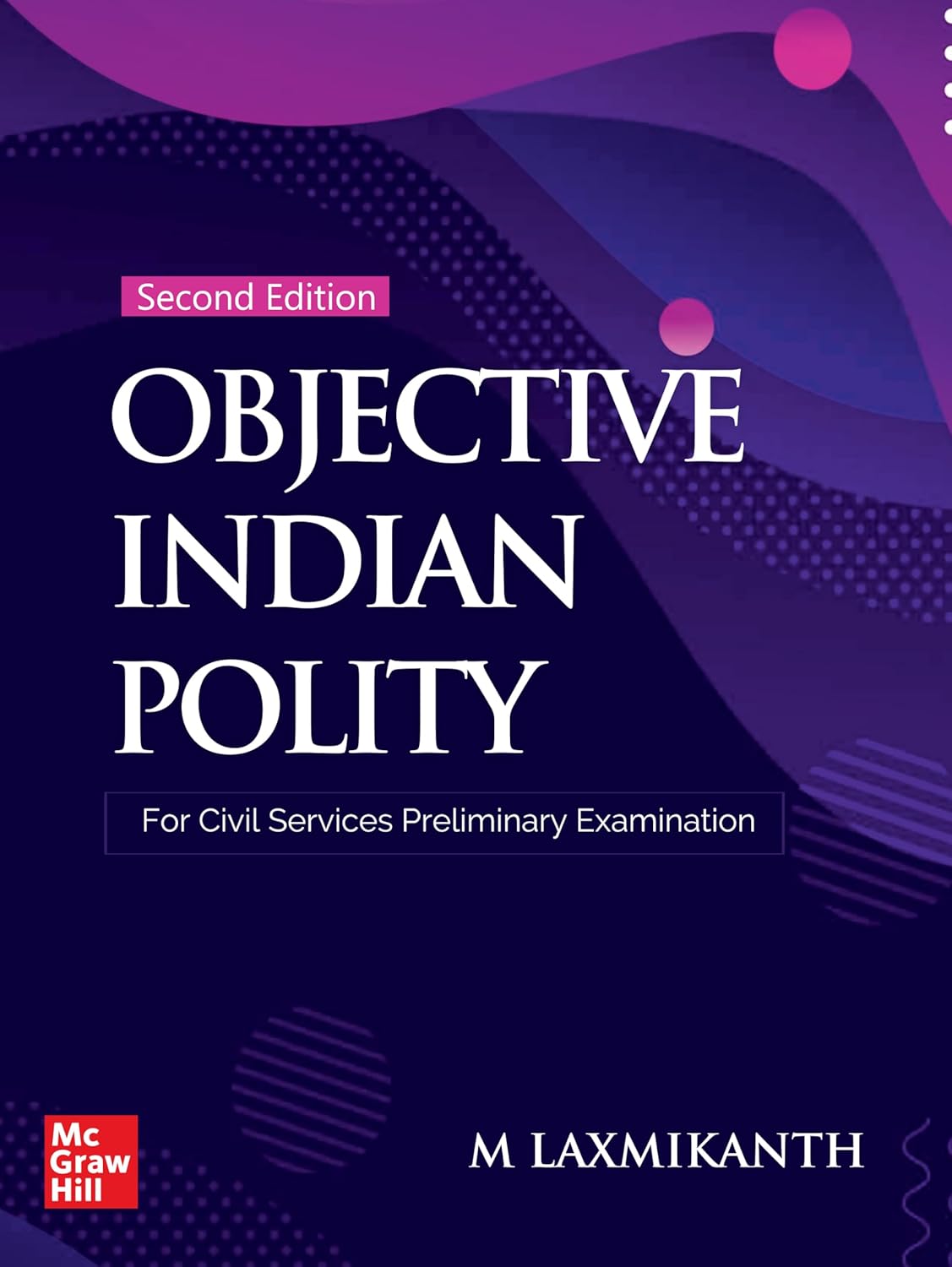
Must-Have Book for UPSC Preparation
This is one of the most important books for UPSC aspirants, especially for building strong fundamentals.
✔ Considered essential by serious UPSC aspirants
- ✔ Helps in concept clarity
- ✔ Useful for Prelims preparation
- ✔ Recommended for beginners
- UPSC Prelims has two papers: GS Paper I and CSAT.
- Only GS Paper I marks count for the Prelims cut-off.
- CSAT is qualifying, but failing it disqualifies your attempt.
- Negative marking applies in both papers.
- Mock tests, PYQs, and calm decision-making are essential for success.
Part 1: The Two-Paper Structure
The UPSC Preliminary Examination is conducted in two papers on the same day. Both papers are objective in nature, and each paper carries 200 marks. However, the role of each paper is very different.
| Parameter | Paper I: General Studies | Paper II: CSAT |
|---|---|---|
| Marks | 200 | 200 |
| Duration | 2 hours | 2 hours |
| Number of Questions | 100 | 80 |
| Marks per Question | 2 marks | 2.5 marks |
| Negative Marking | 1/3rd of marks assigned | 1/3rd of marks assigned |
| Nature | Merit-based | Qualifying only |
| Language | Bilingual (Hindi and English) | Bilingual (Hindi and English) |
The Critical Distinction: Which Paper Actually Matters More?
The most important thing to understand is that GS Paper I determines whether you cross the Prelims cut-off. CSAT does not contribute to that cut-off. But CSAT must still be cleared with at least 33 percent, or your GS score becomes irrelevant.
Part 2: Paper I (General Studies) Syllabus Breakdown
GS Paper I covers seven broad areas. UPSC does not ask them as isolated school subjects. It tests conceptual understanding, interlinkages, and the ability to interpret current developments through a static foundation.
| Subject | Key Topics | Approx. Questions (Recent Trend) |
|---|---|---|
| Current Affairs | National and international events of importance | 15–20 |
| History | Ancient, Medieval, Modern History and National Movement | 12–15 |
| Geography | Physical, Social and Economic Geography of India and the World | 12–15 |
| Indian Polity & Governance | Constitution, Political System, Panchayati Raj, Rights Issues | 15–18 |
| Economic & Social Development | Development, Poverty, Inclusion, Demographics | 12–15 |
| Environment & Ecology | Biodiversity, Climate Change, Ecology | 12–15 |
| General Science | Basic science concepts and applications | 8–10 |
Detailed GS Paper I Coverage
- Current Affairs: Government schemes, global developments, important appointments, social issues, policy changes.
- History of India and National Movement: Ancient, medieval, modern India, freedom struggle, important personalities and events.
- Indian and World Geography: Physical features, rivers, climate, agriculture, industries, global geography concepts.
- Indian Polity and Governance: Constitution, parliament, judiciary, local governance, rights issues, public policy.
- Economic and Social Development: Growth, development, poverty, inclusion, population, social sector outcomes.
- Environment and Climate Change: Biodiversity, conservation, pollution, international agreements, ecological concepts.
- General Science: Physics, Chemistry, Biology, technology-linked basic awareness.
Part 3: Paper II (CSAT) Syllabus and Strategy
CSAT is often misunderstood. Many aspirants assume it is easy and postpone it. That is dangerous. Over the years, the paper has become unpredictable enough that regular practice is essential, especially for non-technical or non-maths backgrounds.
| Topic | What It Includes |
|---|---|
| Comprehension | Reading passages and answering inferential and factual questions |
| Interpersonal Skills | Communication, social judgement |
| Logical Reasoning | Syllogisms, analogies, deductions, patterns |
| Analytical Ability | Data analysis, structured reasoning |
| Decision Making | Practical judgement and applied reasoning |
| Problem Solving | Application-based logical situations |
| General Mental Ability | Aptitude and reasoning-based tasks |
| Basic Numeracy | Class X level numbers, arithmetic, magnitudes |
| Data Interpretation | Charts, graphs, tables, data sufficiency |
Part 4: Real Cut-Off Analysis (UPSC CSE 2025)
Cut-off trends help you understand what kind of score you should target, but they should be used carefully. They are benchmarks, not guarantees.
Prelims Cut-Off (GS Paper I Only)
| Category | Cut-Off Marks (Out of 200) |
|---|---|
| General | 92.66 |
| OBC | 92.00 |
| EWS | 89.34 |
| SC | 84.00 |
| ST | 82.66 |
Mains Cut-Off (To Qualify for Interview)
| Category | Cut-Off Marks (Out of 1750) |
|---|---|
| General | 739 |
| OBC | 717 |
| EWS | 706 |
| SC | 700 |
| ST | 694 |
Final Cut-Off (Mains + Interview)
| Category | Cut-Off Marks (Out of 2025) |
|---|---|
| General | 963 |
| OBC | 931 |
| EWS | 926 |
| SC | 905 |
| ST | 902 |
For General category aspirants, a safe Prelims target is usually considered above 100 in GS Paper I. The exact cut-off changes each year, but aiming safely above the trend gives breathing room.
Tie-Breaking Rules
If two or more candidates score equal marks, UPSC follows a tie-breaking order:
- Candidate with higher marks in the compulsory written papers is ranked higher.
- If still tied, higher marks in compulsory written papers alone are considered.
- If still tied, the older candidate is placed higher.
Part 5: What a Topper Did Right
One of the clearest lessons from toppers is that they reduce resources and increase revisions. That matters more than chasing every new source.
His Resource Strategy
| Subject | Resource Used |
|---|---|
| Polity | Laxmikanth |
| Modern History | Spectrum |
| Ancient & Medieval History | Tamil Nadu Board books |
| Art & Culture | Nitin Singhania |
| Environment & Geography | NCERTs + current affairs |
| Economy | NCERT grounding + current linkage |
| Science & Technology | Current affairs + annual compilation |
His Current Affairs Strategy
- Used only The Hindu consistently.
- Relied on annual current affairs compilation for revision.
- Ignored unnecessary political noise and stayed syllabus-focused.
His Exam-Day Philosophy
He emphasized that in the real exam, you are usually fully certain about only a limited number of questions. The rest are managed through elimination, calmness, and controlled risk-taking. His practical rule was to attempt when at least two options could be confidently eliminated.
Part 6: What Recent Toppers Did Differently
Recent topper analysis shows a common pattern. They were not trying to master everything at once. They focused on conceptual clarity, consistent revision, mock-test analysis, and manageable current affairs.
- Strong foundation in NCERTs and standard books
- Regular use of previous year questions
- Full-length mock tests under time pressure
- CSAT practice taken seriously
- Current affairs used as a supplement, not as a replacement for static study
Part 7: Common Mistakes to Avoid
- Neglecting CSAT: Many candidates fail here despite good GS scores.
- Too many resources: More books do not mean more preparation.
- Ignoring PYQs: Previous year questions reveal UPSC’s mindset.
- Casual mock tests: Taking tests without analysis wastes their value.
- Over-attempting: Negative marking can hurt badly if accuracy drops.
Part 8: Your Prelims Action Plan
Phase 1: Foundation
- Complete NCERTs for major subjects.
- Build standard books like Laxmikanth and Spectrum.
- Start newspaper reading.
- Solve topic-wise PYQs after each subject.
Phase 2: Integration
- Link static topics with current affairs.
- Start sectional tests.
- Practice CSAT every week.
- Create concise revision notes.
Phase 3: Testing and Revision
- Take full-length mock tests under timed conditions.
- Review every mistake carefully.
- Strengthen weak areas revealed by tests.
- Revise compact notes repeatedly.
Phase 4: Final 60 Days
- Simulate exam conditions.
- Avoid new major resources.
- Focus on revision, accuracy, and mental calmness.
- Practice elimination-based solving.
Conclusion: The Real Prelims Mindset
UPSC Prelims is not just a knowledge test. It is a judgment test. It checks how well you handle uncertainty, manage time, control anxiety, and take calculated decisions under pressure.
Success comes from a few simple but disciplined habits: understanding the pattern clearly, limiting resources, revising often, practicing CSAT steadily, and treating mock tests seriously. Once you understand the pattern, the next step is consistent execution.
Frequently Asked Questions
How many papers are there in UPSC Prelims?
There are two papers: GS Paper I and CSAT.
Does CSAT count for the Prelims cut-off?
No. CSAT is only qualifying, but you must secure at least 33 percent to pass it.
How many questions are there in GS Paper I?
There are 100 questions in GS Paper I.
What is the negative marking in Prelims?
There is a one-third negative marking for every wrong answer in both papers.
What is a safe score in GS Paper I for General category?
While cut-offs vary, many aspirants aim for 100 or more to stay on the safer side.